Brújula Press
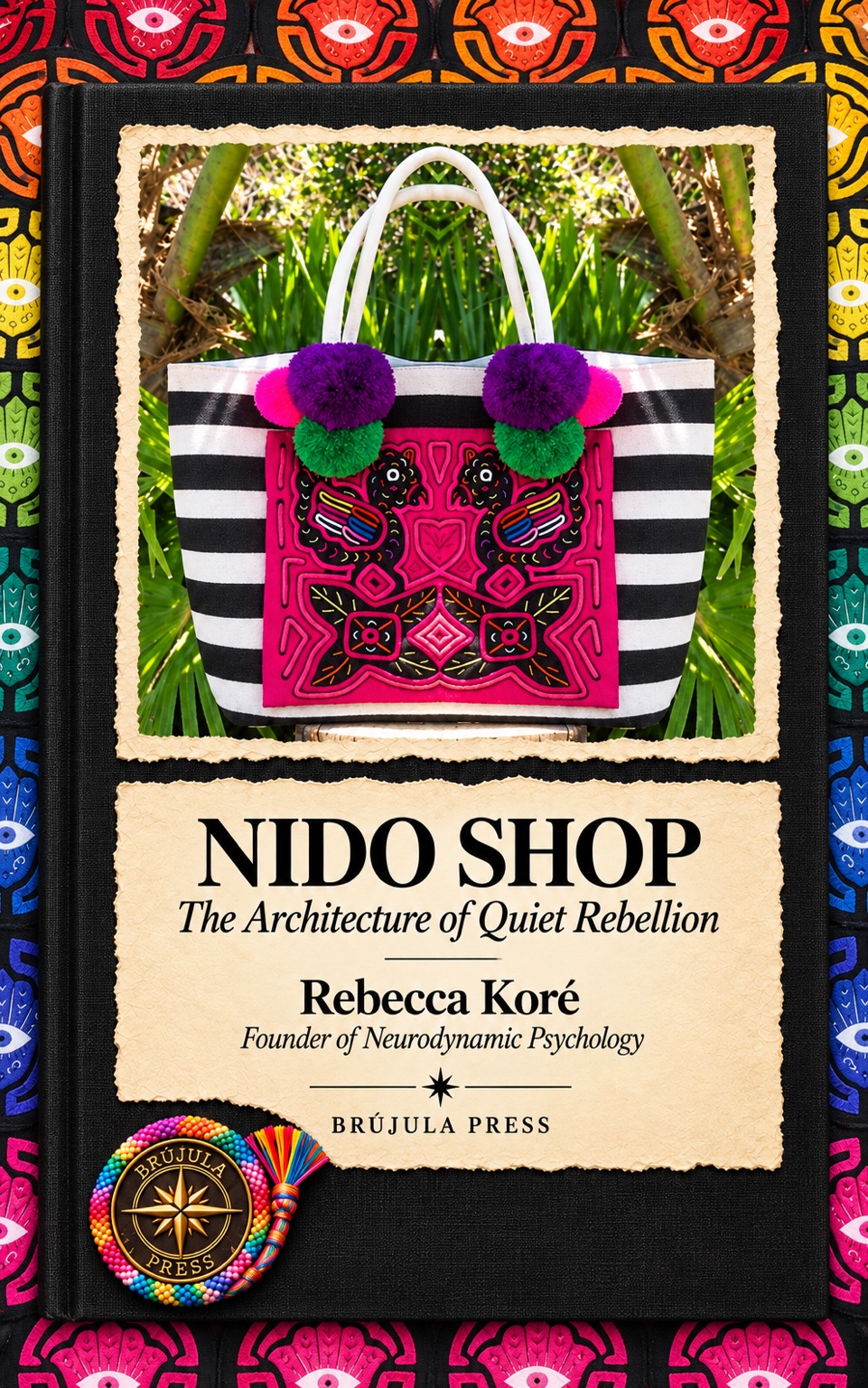
Nido Shop: The Architecture of Quiet Rebellion
Forthcoming 2027
An account of design, Indigenous craftsmanship, and economic intervention in Panama.
From chapter six, The Nido Stripe
Every design system eventually finds its architecture.
For Nido, it arrived unexpectedly in a length of black-and-white striped fabric.
At first, it was simply another textile among many. But as I continued designing, I realized it did something none of the printed fabrics could do. It created space.
The stripe didn't compete with the handmade work. It framed it.
The bold geometry quieted everything around it, allowing a single handcrafted textile to become the visual center of an object. A four-inch mola suddenly carried an entire bag. A small embroidered patch transformed a dress. One handmade element became enough.
Without realizing it at first, I had found the architectural field of the Patch Economy.
The stripe became the constant.
Everything else was free to evolve.
The original Nido bags had paired African wax prints with Guna molas. As the work expanded, more Indigenous traditions entered the collection. Ngäbe Buglé embroidered patches. Handwoven pintas. Small symbolic textiles.
Each carried a different visual language, different histories, different makers.
Rather than blending those traditions into a single aesthetic, I wanted each one to remain fully itself.
The stripe made that possible.
Instead of asking Indigenous work to adapt to fashion, the surrounding garment adapted to the handmade work.
The textile remained the protagonist.