These flyers may be printed and shared freely, unaltered and with attribution. Not for resale or modification.
© 2026 Rebecca Koré · Brújula Press
Neurodynamic Psychology
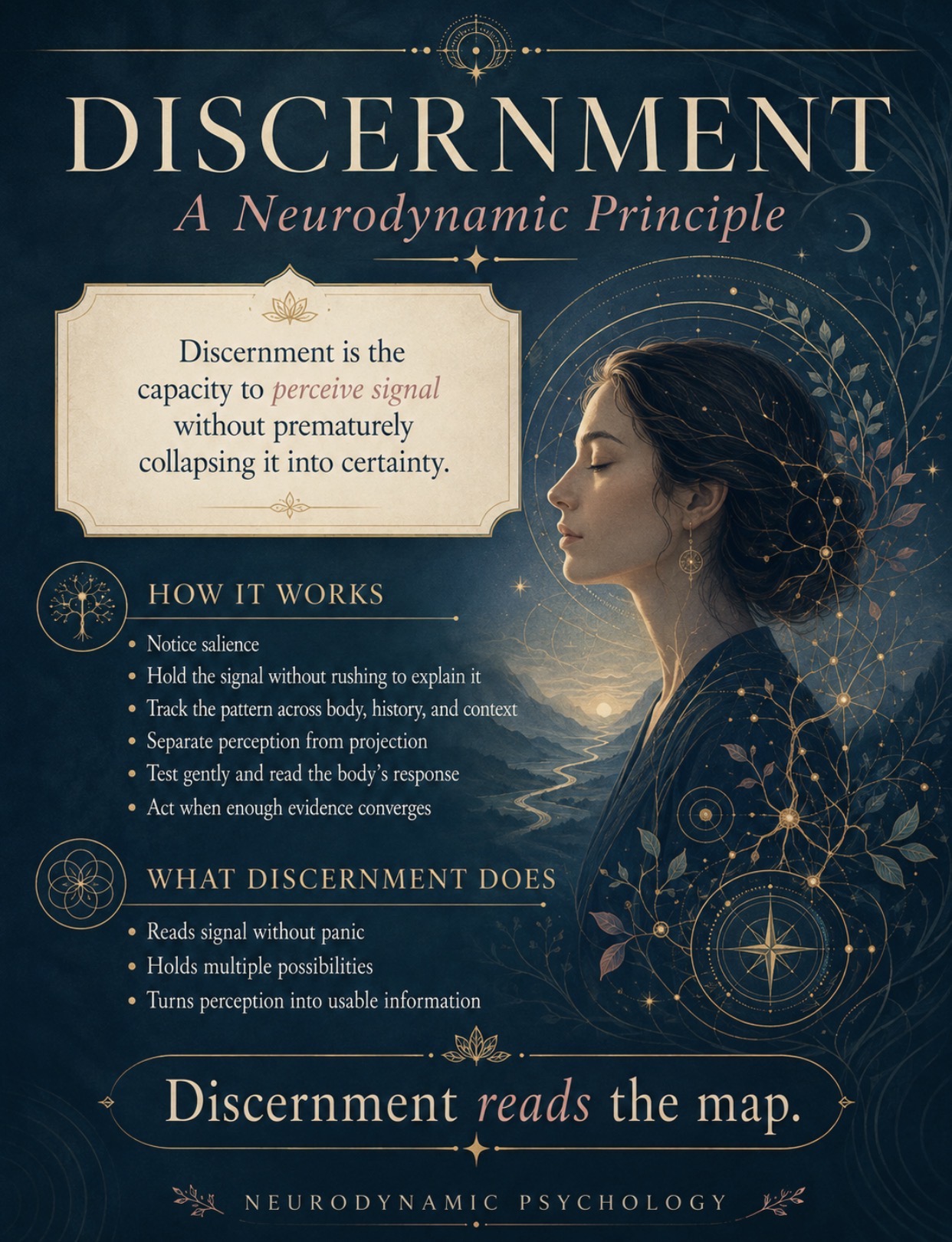
Discernment
A Neurodynamic Principle
Discernment is the capacity to perceive signal without prematurely collapsing it into certainty.
How it works
Notice salience
Hold the signal without rushing to explain it
Track the pattern across body, history, and context
Separate perception from projection
Test gently and read the body’s response
Act when enough evidence converges
What discernment does
Reads signal without panic
Holds multiple possibilities
Turns perception into usable information
Discernment reads the map.
These flyers may be printed and shared freely, unaltered and with attribution. Not for resale or modification.
© 2026 Rebecca Koré · Brújula Press
Neurodynamic Psychology
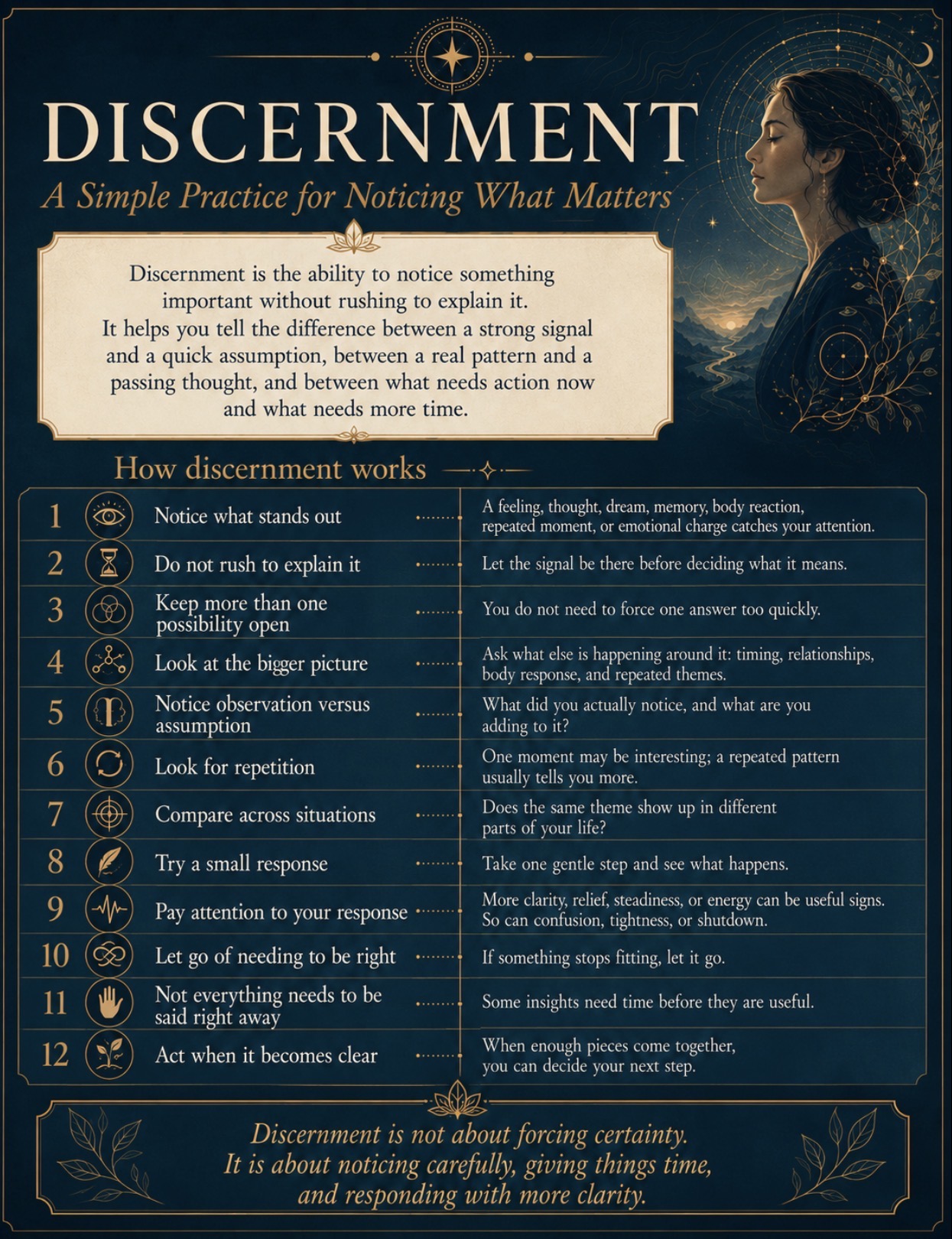
Discernment
A Simple Practice for Noticing What Matters
Discernment is the ability to notice something important without rushing to explain it. It helps you tell the difference between a strong signal and a quick assumption, between a real pattern and a passing thought, and between what needs action now and what needs more time.
How discernment works
Notice what stands out
A feeling, thought, dream, memory, body reaction, repeated moment, or emotional charge catches your attention.
Do not rush to explain it
Let the signal be there before deciding what it means.
Keep more than one possibility open
You do not need to force one answer too quickly.
Look at the bigger picture
Ask what else is happening around it: timing, relationships, body response, and repeated themes.
Notice observation versus assumption
What did you actually notice, and what are you adding to it?
Look for repetition
One moment may be interesting; a repeated pattern usually tells you more.
Compare across situations
Does the same theme show up in different parts of your life?
Try a small response
Take one gentle step and see what happens.
Pay attention to your response
More clarity, relief, steadiness, or energy can be useful signs. So can confusion, tightness, or shutdown.
Let go of needing to be right
If something stops fitting, let it go.
Not everything needs to be said right away
Some insights need time before they are useful.
Act when it becomes clear
When enough pieces come together, you can decide your next step.
Discernment is not about forcing certainty. It is about noticing carefully, giving things time, and responding with more clarity.